
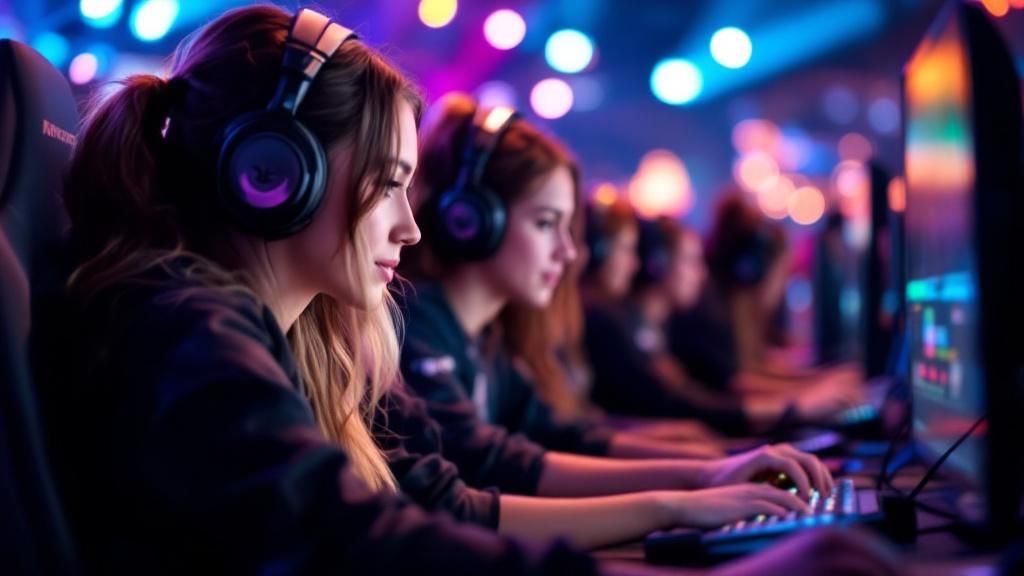
The esports industry, long dominated by male players and audiences, is experiencing a remarkable transformation. Female gamers are increasingly shattering stereotypes and claiming their deserved position at the top tiers of competition, from elite competitions to major sponsorship opportunities. This article examines how women are overcoming the glass ceiling in competitive esports, examining the barriers they’ve overcome, the trailblazing competitors driving this movement, and what their achievements means for the global competitive gaming landscape.
Growing Visibility of Women in Professional Esports
The landscape of esports competition has undergone a major shift over the past decade. Female players have progressively demonstrated remarkable talent and commitment, securing acknowledgement in competitions that were previously perceived as male-exclusive domains. This development demonstrates wider shifts within the esports sector, where skill and achievement are more highly regarded above sex. Leading esports companies now purposefully engage female participants, recognizing both the financial prospects and the unexploited pool of esports ability that women constitute in the industry.
Statistical findings underscores this rising prominence. Recent surveys indicate that women now constitute roughly 30 to 40 per cent of the worldwide gaming audience, yet their representation in professional esports remains substantially lower. However, this disparity is narrowing quickly. Tournaments featuring female competitors have achieved record viewership, demonstrating considerable viewer interest for different competitive gaming offerings. Financial backing in female teams have risen substantially, indicating that big organisations recognise the commercial viability and cultural importance of backing female esports players.
The visibility of accomplished women in gaming has created a significant wave of change across the gaming sector. Young women now have tangible role models to look up to, substantially shifting views of gaming as a viable career path. Streaming platforms have amplified women’s representation, allowing talented players to develop large audiences independently. This democratisation of gaming content has allowed women to bypass traditional gatekeepers and establish themselves as prominent voices within the esports ecosystem, inspiring the next generation of women in esports.
Structural changes within major esports franchises have further accelerated women’s progression. A number of leading organisations have created women-focused squads, developed extensive training infrastructure, and implemented mentorship programmes specifically designed to nurture up-and-coming players. These institutional commitments demonstrate clear acknowledgement that inclusive practices enhance esports competition. Furthermore, governing bodies have started introducing policies supporting inclusion, ensuring that tournaments provide fair access for women’s involvement and fair compensation.
Despite significant progress, challenges persist within the esports landscape. Online abuse and hostile conduct keep impacting female players unfairly, establishing unwelcoming spaces that inhibit engagement. Nevertheless, the combined resolve of female gamers, paired with increasing industry support, suggests these obstacles are gradually diminishing. The momentum currently building within professional esports suggests that women’s prominence will keep growing, fundamentally reshaping the competitive gaming industry for generations to come.
Obstacles and Challenges Encountered by Female Esports Players
Despite significant progress, female esports professionals continue experiencing significant obstacles within the industry. Gender-based discrimination, poor representation in professional teams, and scarce sponsorship opportunities remain persistent challenges. Additionally, many female gamers face questions concerning their ability to compete and struggle with unequal prize payouts. These structural barriers, combined with cultural pressures and social stereotypes, create a challenging environment that deters aspiring female players from embarking on professional careers in esports.
Addressing Harassment and Discrimination
Harassment persists as a considerable issue for female esports professionals, both online and offline. Toxic behaviour across gaming communities, encompassing derogatory language and organised campaigns, generates unwelcoming spaces that undermine engagement and self-assurance. Many female players describe facing prejudicial treatment from teammates, opponents, and spectators alike. Notwithstanding these obstacles, a considerable number of women have shown exceptional determination, establishing support systems and pushing for inclusive policies. Their resolve to achieve success despite systemic prejudice has sparked important dialogue about professional conduct expectations in professional esports bodies.
Creating safer, more inclusive spaces requires commitment from industry stakeholders, tournament organisers, and gaming communities. Progressive organisations are implementing stricter code-of-conduct policies, establishing safeguarding procedures, and promoting diversity initiatives. Educational campaigns showcasing the achievements of female professionals help address established misconceptions and misconceptions. Furthermore, mentorship programmes connecting experienced female players with emerging talent provide crucial direction and encouragement. These combined initiatives demonstrate that fostering inclusivity benefits the entire esports ecosystem by drawing varied players and expanding the talent base.
- Establish strict anti-harassment policies throughout the sector
- Develop mentorship programmes to support aspiring female athletes
- Enhance varied perspectives within commentary teams
- Develop specialist support systems supporting women in the sport
- Increase clarity on sponsorship and prize distribution
Future Prospects and Industry Expansion
The esports industry finds itself at a critical turning point, with unprecedented opportunities emerging for female gamers. As leading esports companies increasingly invest in women’s teams and specialised tournaments, the professional scene is developing quickly. Corporate partnerships, media rights agreements, and event purses designed for female players are growing exponentially. This financial commitment reflects true industry acceptance that women form a largely untapped segment with considerable earning capacity, offering enduring career opportunities for emerging women players.
Looking ahead, the trajectory for women in esports appears remarkably promising. Educational institutions are introducing esports scholarships for female students, whilst gaming companies are adopting inclusive recruitment policies. Ground-level efforts and locally-organised initiatives are nurturing young talent from different demographics. As visibility expands through streaming platforms and mainstream media coverage, more women will undoubtedly pursue professional gaming careers. The convergence of technological advancement, organisational commitment, and cultural shift suggests that gender parity in esports is no longer simply a distant aspiration but an realistic goal within the coming decade.
